
From an Idea to Hey Guru: Building the Employee Handbook for the AI Era
Most employee handbooks are a document nobody can find and nobody is sure is current. Alison Lambert, founder of Hey Guru, wanted one employees could simply ask. Here is her account of building it with RiverAI, and of why every policy change still needs a person to approve it.
When I first started talking to RiverAI, I had a very clear problem in mind. Employee handbooks are important, but the way most businesses use them is completely outdated.
They are often long documents sitting in SharePoint, buried in an HR system or saved as a PDF somewhere. Employees don’t know where to find them, managers don’t always know which version is current, and HR teams spend far too much time answering questions that have already been answered somewhere else.
At the same time, employment law changes constantly.
I could see an opportunity to create something genuinely different. Not just another digital handbook, but an intelligent HR platform that employees could actually talk to.
That idea became Hey Guru.
The vision
The concept was simple to explain, but much harder to build. I wanted businesses to be able to bring their policies, employee handbook, processes and company guidance into one place.
Then, instead of searching through documents, an employee could simply ask:
- “What’s our maternity policy?”
- “How many days can I work from home?”
- “What should I do if I’m off sick?”
And get an immediate answer based on their employer’s approved information, rather than generic information from the internet.
For managers, the opportunity was even bigger. Guru could help them understand the correct company process before they act, giving them better access to HR guidance without expecting every manager to become an HR expert.
But there was another part of the vision that was incredibly important to me. The platform needed to help businesses keep up with changes in employment law without taking control away from HR.
If something changes, Guru can identify potentially affected policies and help propose an update. But it doesn’t silently rewrite the employee handbook.
A human reviews it. A human approves it. The business stays in control.
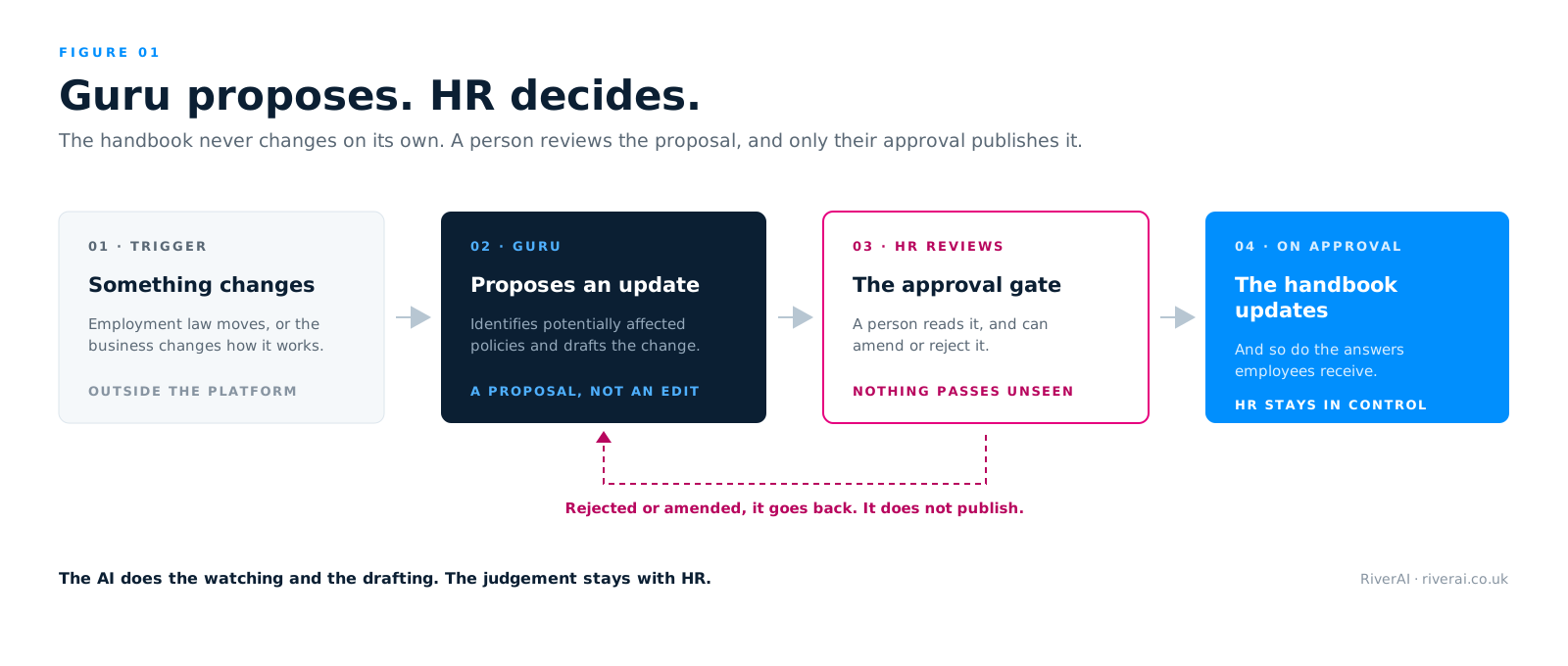
That balance between AI capability and human HR expertise became fundamental to the product.
Why RiverAI
I didn’t just need somebody who could build software. I needed a team who could understand the business idea behind it.
From the beginning, RiverAI helped us think beyond the initial feature list. The conversations weren’t just “what screens do you want?”. They were:
- “How should this actually work?”
- “What does the employee need at this point?”
- “What does HR need to remain in control of?”
- “Where should AI help and where should it stop?”
That distinction made a huge difference. They helped us turn the concept into a product architecture that could support where we wanted Hey Guru to go, rather than simply building a polished front end around an AI chatbot.
Building Hey Guru
RiverAI designed and built the first Hey Guru platform using a modern cloud architecture hosted in Microsoft Azure, with the AI and orchestration capability required to bring the experience to life.
The development was delivered through a structured series of sprints, allowing us to see the product develop, test ideas and refine the experience as we went.
For me, that iterative approach was particularly valuable. When you are creating something new, you don’t know every answer on day one. Seeing the platform take shape allowed us to improve the product throughout the build rather than discovering at the end that we’d built exactly what was written in an early specification but not necessarily what customers needed.
More than an AI chatbot
One of the things I’m happiest about is that Hey Guru doesn’t feel like we’ve simply put ChatGPT on top of an employee handbook. The product has a clear purpose, and Guru works from the information the employer has approved.
- It helps employees find answers.
- It helps managers navigate processes.
- It helps HR maintain and improve the information behind those answers.
And as employment requirements evolve, the platform is designed to help organisations understand where their policies may need attention.
That’s a much bigger proposition than document search. We’re turning the traditional employee handbook into a living, intelligent HR system.
The experience of working with RiverAI
The RiverAI team understood very quickly what we were trying to achieve. They challenged ideas when they needed challenging, suggested better approaches when they saw them and translated quite a complicated vision into something that feels straightforward to the user.
That has been one of the most important parts of the relationship.
As a founder, you inevitably spend a lot of time thinking about what a product could become. You need a technology partner who can share that ambition while still making sensible decisions about what should be built now. RiverAI have done that incredibly well.
The result
We now have a platform that represents the original vision far better than I could have described it when we started. Hey Guru gives businesses a completely different way of thinking about their employee handbook.
Instead of:
- Find the document.
- Open the PDF.
- Search for the section.
- Work out whether it’s still current.
You can simply ask Guru.
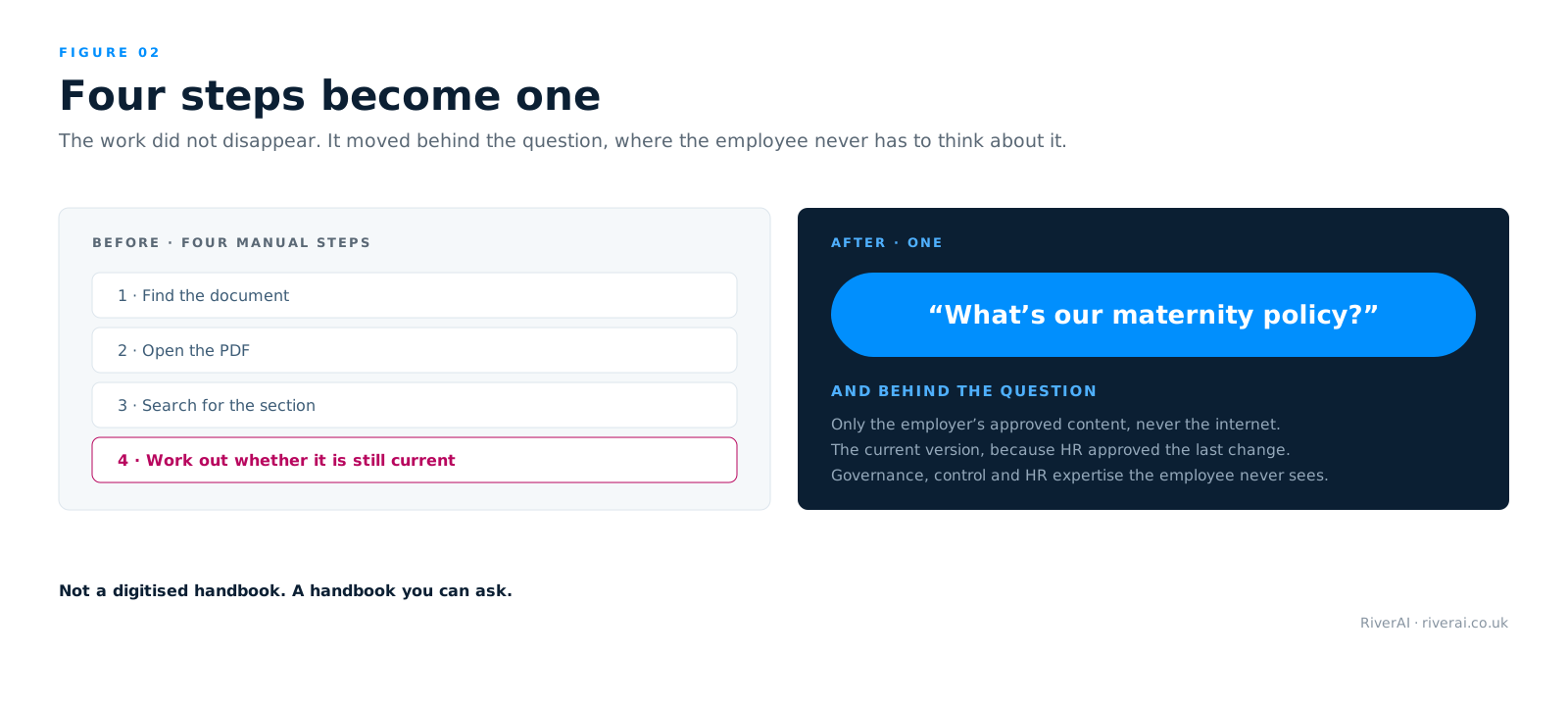
And behind that simple experience is the governance, control and HR expertise needed to make the answer useful.
That is what excites me most. We haven’t just digitised an employee handbook. We’ve started to redefine what an employee handbook can be.
“RiverAI didn’t just take our requirements and build some software. They understood what we were trying to create and helped us make the product better.
Hey Guru started as an idea for a smarter employee handbook. What we’ve built is much more ambitious: a living HR platform that employees can talk to, managers can rely on and HR teams remain firmly in control of.
The team have been brilliant to work with. They’ve challenged us, moved quickly and helped turn a genuinely new concept into a product we’re incredibly proud of.”
Alison Lambert, Founder of Hey Guru