
MSPs, your margin problem and your growth problem are the same problem
Thin margins, look-alike competitors, clients who drift when the service slips. The way out is not more people. It is changing how your desk runs, and turning AI into a capability you own and a service you sell.
If you own an MSP, you already know the shape of the year. Four pressures, all pulling at once.
- Launch new services. Standing still is going backwards, so you are always under pressure to add to what you sell.
- Compete on thin margins. It is a price fight, and every prospect weighs you up against three providers who look identical on paper.
- Win new logos. And win them with something that genuinely sets you apart, not just a lower price.
- Keep the clients you have. Hold on to them by keeping the service sharp enough that they never think about leaving.
Four pressures. They feel like four separate problems. They are really one.
The one problem hiding under the four
You sell more or less the same managed services as everyone else, and the main lever you have to grow or improve is to add people.
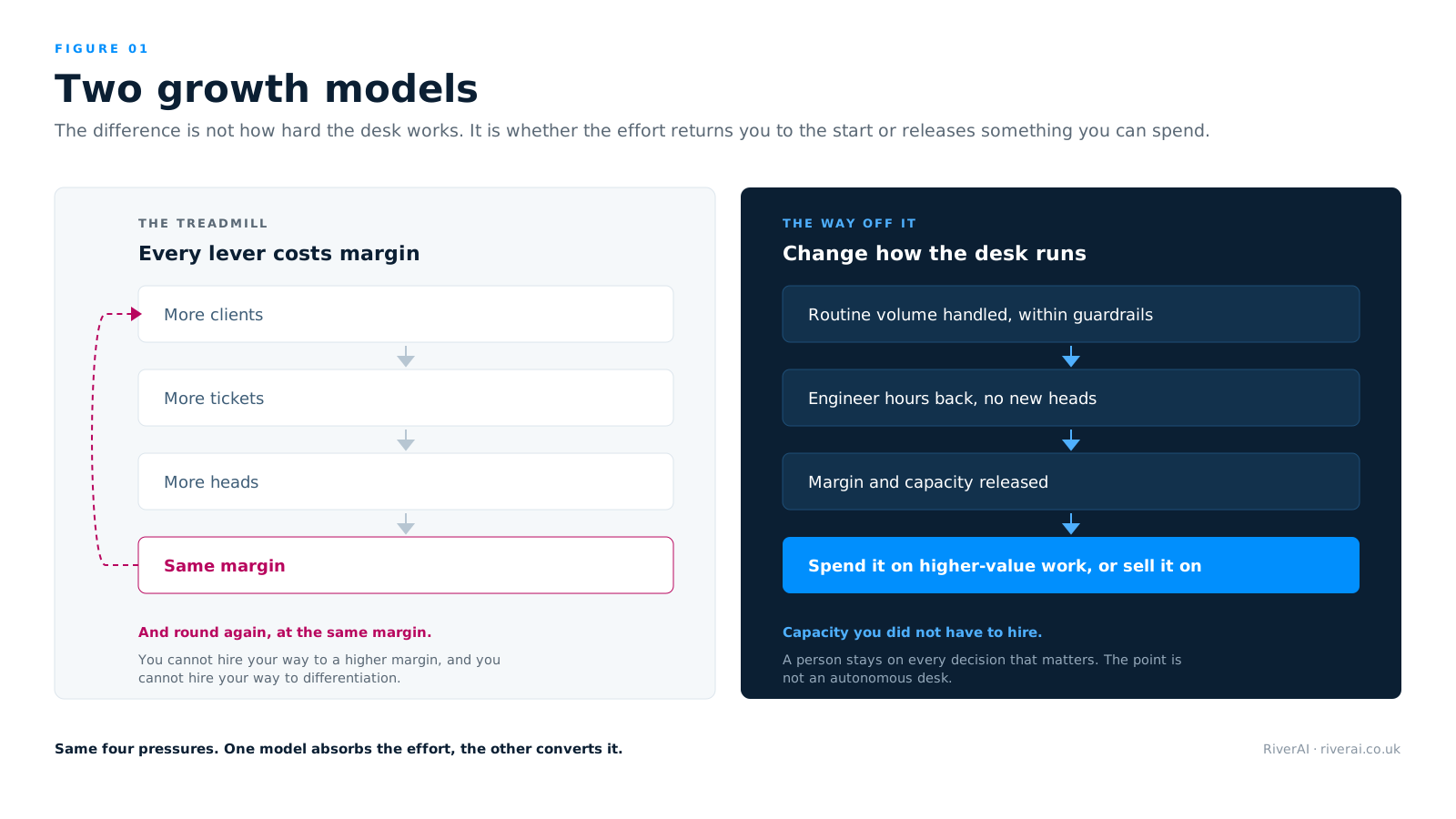
More tickets? Hire an engineer. Tighter SLAs? Hire an engineer. New service line? Hire a team. Every lever you pull costs margin, and margin is the thing you have least of. That is the trap. You cannot hire your way to a higher margin, and you cannot hire your way to differentiation, because your competitors are recruiting from the same pool and selling the same thing you are.
So the harder you work the treadmill, the faster it spins. More clients, more tickets, more heads, same margin.
It is a growth model that punishes you for growing.
“Just add AI” is not the way off it
The obvious answer, the one every vendor is pushing, is to bolt some AI on. A chatbot on the website. A copilot for the engineers. A logo on the sales deck that says you are an AI-enabled MSP now.
That does not change anything, for two reasons.
First, everyone is saying it, so it differentiates nothing. “We use AI” is table stakes now, not a selling point. Second, a bolted-on bot that breaks on the small stuff does real damage. Your team stops trusting it, your clients notice, and you have spent money making the experience worse. Buying a tool is not a strategy, and a demo is not an outcome.
The shift that matters is not adding AI as a feature. It is using it to change the economics of how your desk actually runs.
Three things it can move, if you do it properly
It gives you capacity back, which protects margin. On most desks, a small number of ticket categories account for the overwhelming majority of the volume, and those are the routine, repeatable ones: access, resets, mailbox and permissions, connectivity, starters and leavers. That work sits on top of skilled, expensive engineers. Take the repetitive load off the desk and you get engineer hours back without adding a single head. That is margin you did not have yesterday, and capacity you can point at higher-value work instead of hiring for it.
It fixes what actually causes churn. Clients rarely leave over a single big failure. They leave over the slow drip: the call that rang out, the ticket that sat for a day, the same issue handled three different ways by three different engineers. A front door that answers every contact, on every channel, and triages it correctly the first time, closes those gaps. Consistency is what keeps clients, and consistency is exactly what a well-run system delivers that a stretched team on a busy morning cannot.
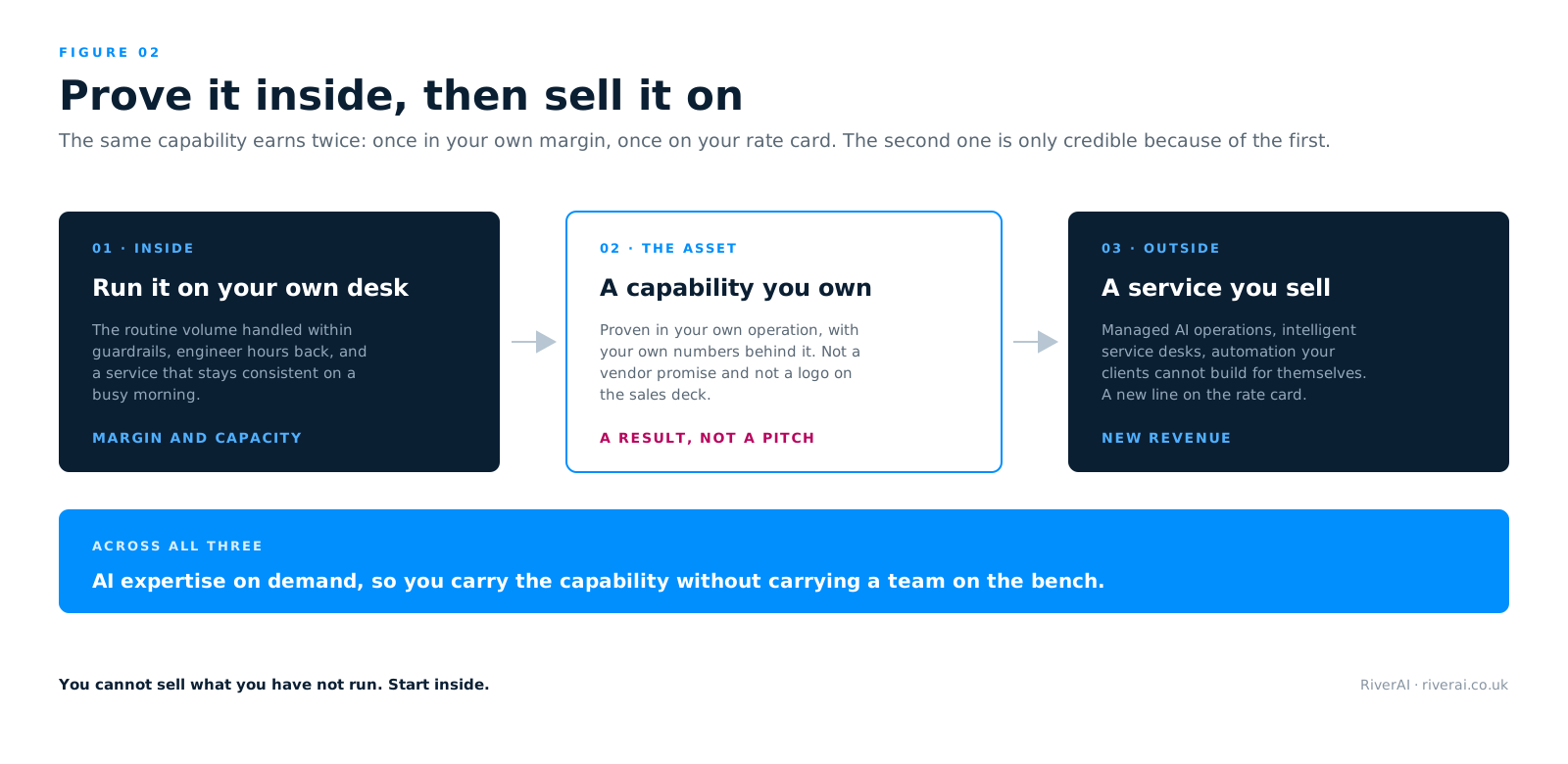
It wins new logos, and it becomes a service line you can sell. This is where growth comes from, and it comes twice. First, a visibly better service experience is a differentiator a price comparison cannot capture, so you win on service rather than on being cheapest. Second, and this is the bonus, once you run AI in your own business you can sell it to your clients. AI services become a new line on your rate card: managed AI operations, intelligent service desks, automation your clients cannot build for themselves. You stop being one of many managed service providers and become the one that already runs the thing everyone else is being told they need.
The best part: a world-class AI capability you don’t have to build
Here is the objection every owner is thinking by now. “This all sounds good, but I can’t build an AI team. I can’t find the people, I can’t afford them, and I can’t keep them.” You are right. The AI talent market is brutal, the good people are scarce and expensive, and for most owner-operated MSPs a permanent AI function makes no sense.
You do not need one.
This is the part we find most exciting, and it is why we built our partner programme. It gives you a world-class AI capability on demand, without hiring a single specialist. We become your AI arm. We scale up when you are building and delivering, and scale back when you are not, so you carry the capability without carrying the cost of a team sitting on the bench.
It is how we already work with partners like Digital Ways of Working, Jungle IT, Perform Partners and Infratech Systems. They bring the clients and the relationships, we bring the AI expertise on demand, and together we deliver something none of us sells alone. That is the difference between talking about AI and doing it.
And it lets you do the one thing that truly convinces a buyer: drink your own champagne. AI is the biggest conversation business has had in a generation. Every client and every prospect is asking the same question, which is who can genuinely deliver it. When you have run AI in your own desk, cut your own costs, sharpened your own service, and can show it, you are not pitching a promise. You are showing a result. That is differentiation nobody can argue with, and it is the fastest way to turn the hottest topic in the market into new logos on your books.
The honest part: how to do it without it blowing up
This is where MSPs get burned, so it is worth being straight about it.
- Start where the volume is, not where the demo is. Prove it on your busiest, most repetitive work, because that is where the return is and where you can measure it.
- Prove it on your own data before it touches anything. Run it alongside your team first, watching and learning, until it clears an agreed accuracy bar. Earn the right to act, do not assume it.
- Orchestrate, do not rip and replace. Your PSA and RMM stay where they are. The intelligence sits above them and writes back to them. No big-bang migration, no year-long project.
- Keep a person on every decision that matters. The point is not an autonomous desk. It is a desk where the routine is handled and your people spend their judgement where judgement is needed.
- Treat adoption as the goal, not deployment. A capability your engineers trust and use beats a cleverer one they switch off after the first mistake. Success is whether the team leans on it, not whether it launched.
None of this is magic, and anyone who tells you it is should worry you. It is a change to how the work flows, run carefully, with the humans still in charge.
Why the owner-operator has the edge here
Big providers are slow. They have committees, sunk costs in the old way, and no appetite to change what still just about works.
You do not. You can decide on Tuesday and move on Wednesday. For once, being small and owner-run is the advantage, because this is a game of moving early and moving deliberately, not of having the biggest team. Done right, it lets a lean MSP deliver the service levels of a much larger one, win against providers three times its size, and grow the business without growing the headcount in lockstep.
The choice
The pressure is not going away. Price competition, thin margins, demanding clients, the constant push to differentiate. You can keep meeting all four by adding people you cannot really afford, or you can change the economics of how your desk runs, own a capability you did not have to build, and sell it on.
One of those is a treadmill. The other is a way off it.
RiverAI runs a partner programme built for exactly this. We give owner-operated MSPs on-demand AI expertise: we release capacity on your desk, sharpen your client experience, and turn a proven internal capability into a service you can sell, without you hiring an AI team to do it.
If that is the year you are trying to have, talk to us at riverai.co.uk.