
They came to us wanting to “do AI”. We started by mapping their process.
A leading asset rental business serving film and TV production asked us to do AI. Before proposing any, RiverAI and Digital Ways of Working mapped the operation end to end. Three workshops later the client had a documented order lifecycle, a five-phase programme, and a straightforward fix for revenue that had been leaking through the process. No agent had been built yet.
A leading asset rental business serving film and TV production came to us with a clear ask: do AI. High-value kit moving constantly, a core industry-standard hire system covering the basics but no more, and much of the real work happening in the spreadsheets and email around it.
What there was not, underneath the ask, was a documented process to point AI at. So before proposing any AI at all, RiverAI and Digital Ways of Working mapped the operation end to end.
Process and data first, then the agentic layer.
The starting point
- A complex operation with high-value equipment in constant motion, and a core hire system that covers the basics but no more.
- The real work living in spreadsheets and email around the system: planning, tracking, chasing and reconciliation held in a few people’s heads.
- A clear ask to “do AI”, with no documented process underneath it to point AI at.
This is a common enough position, and it is not a criticism of the business. The hire system does what it was bought to do. The spreadsheets grew up around it because they had to, and they work, right up until the people who understand them are busy, on holiday or gone.
What we did instead
- Ran three workshops with their operations team and documented the order lifecycle as it actually runs today, enquiry through to invoice and closure, not an idealised version.
- Produced the operational reference: nine stages with control points and a status model, plus the full lifecycle drawn as a process map.
- Tracked the original brief item by item: delivered, partly delivered, and still open, so nothing is quietly forgotten.
- Organised everything the workshops surfaced into a directional five-phase transformation roadmap.
The distinction that matters is as it actually runs today. A process map of how the work is supposed to happen is close to worthless for this purpose, because the workarounds are where the cost and the risk sit. The workarounds are the process.
What the mapping alone was worth
Before a single agent was built, the process work had already returned four things.
- Revenue leakage spotted. Mapping surfaced significant revenue leaking through the process, with a straightforward fix. Value identified before a single agent was built.
- Knowledge out of people’s heads. The business now runs on a written standard and a training baseline, not on how a few individuals happen to work.
- AI spend pointed at value. A clear read on where AI genuinely earns its place, and where it does not, so investment goes where it pays back.
- Costly surprises avoided. Platform constraints and a usable native AI capability from their own vendor surfaced up front, not expensively mid-build.
The last one is worth sitting with. The client was already paying for AI capability inside their existing platform and did not know it was usable. Three workshops found it. A build that had started with the technology would have found it too, several months and a good deal of money later.
The programme the mapping defined
Defined off the back of the mapping: a sequenced programme, not a big bang. Earlier phases enable later ones, and the quick discipline wins run in parallel with the platform work rather than waiting on it.
- Phase 0, Stabilise. Fix the platform first. A prerequisite for everything after it.
- Phase 1, Discipline. Behaviour, not spend. The fastest return in the programme.
- Phase 2, Data and billing. Clean data, and a clear billing stance.
- Phase 3, Systems layer. Integrate and digitise. Retire the spreadsheets.
- Phase 4, Intelligence. The reporting and profitability layer.
Two streams run alongside the phases.
- Platform and data foundations. The database tier upgraded, dormant capability the client already pays for switched on, and the spreadsheets quietly running parts of the business retired into controlled systems.
- Adoption and training. Run as a change programme, not a project list. Adoption is the success metric, with a named owner, and the process documentation becomes the training material the team is brought up on.
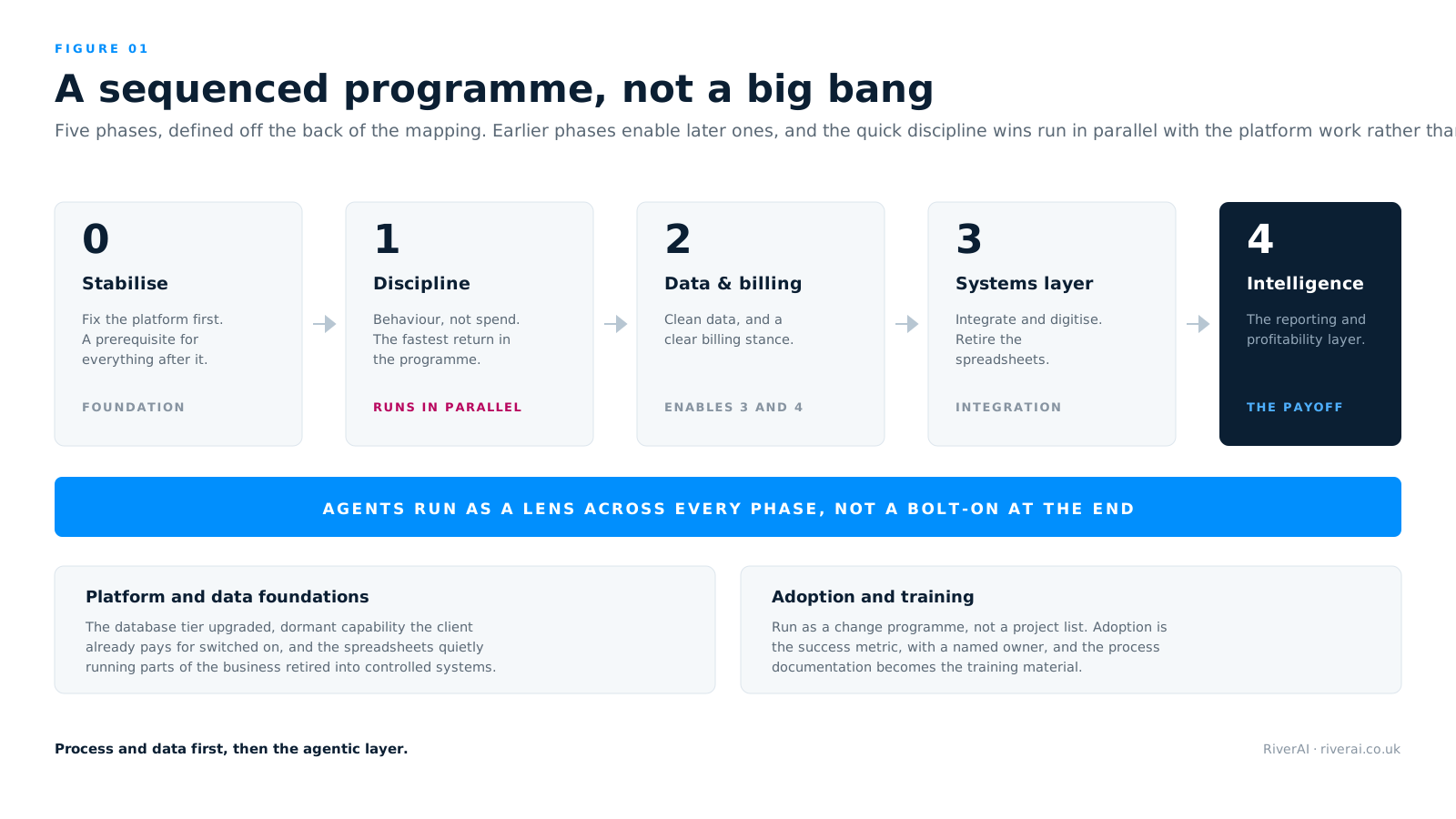
Agents run as a lens across every phase, not a bolt-on at the end.
What the agentic layer can now be built to do
None of the following is built yet. What the mapping did was make it buildable, on a process that is now written down and about to be cleaned up. These are the returns identified for the agentic layer, not returns already banked.
- Chasing that runs itself. Agents watch quotes and confirmations and nudge on cadence, instead of the follow-up depending on someone remembering.
- Fewer things falling through. The handovers between people and systems get an agent watching them, so orders stop slipping through the gaps.
- Reconciliation off people’s desks. Repetitive matching, coding and drafting move to agents, freeing the team for the judgement calls.
- The vendor’s own AI, plugged in. The native AI capability spotted during mapping folds in as an accelerant, rather than something built from scratch.
What happens next
The mapping is done. The next stage moves from understanding the work to rebuilding it.
- Re-imagine, agent-native. Redesign the workflow around agents from the ground up, rather than bolting AI onto how things work today.
- Remove repetitive effort. Take the chasing, matching, coding and drafting off people’s desks, leaving the team the judgement calls.
- Proof of concept. Build the first agents against the highest-value part of the workflow and prove them in the real operation.
- Production. Harden what works and roll it out, folding in the vendor’s native AI where it accelerates the build.
A person reviews every AI-generated output before it reaches a client. That is a design constraint on the build, not a phase of it.
Where this sits in the journey
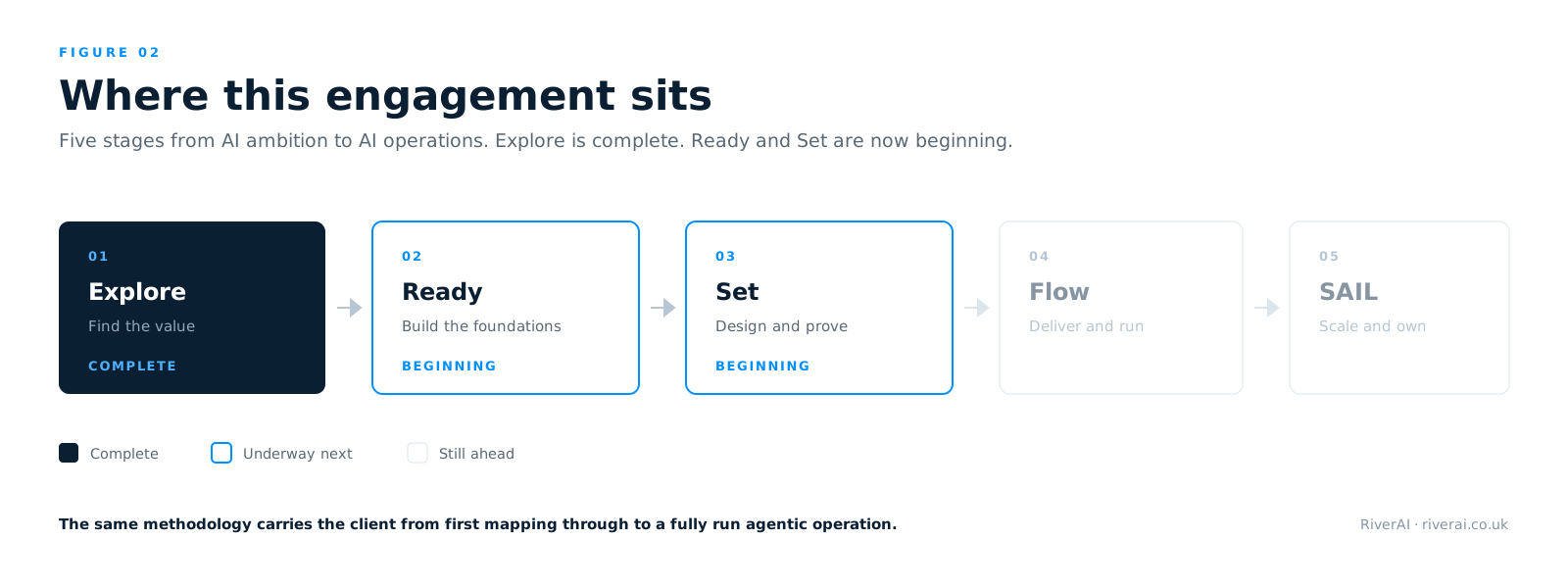
Our five-stage methodology takes organisations from AI ambition to AI operations. This engagement has completed Explore. Ready and Set are now beginning.
Start where we started here
Process and data first, then the agentic layer. We run this same approach with Digital Ways of Working for operationally complex businesses, whatever systems they already run on.
If your own AI programme is an ask without a documented process underneath it, that is the place to start, and it is cheaper to find out there than three months into a build.
Talk to us at riverai.co.uk.